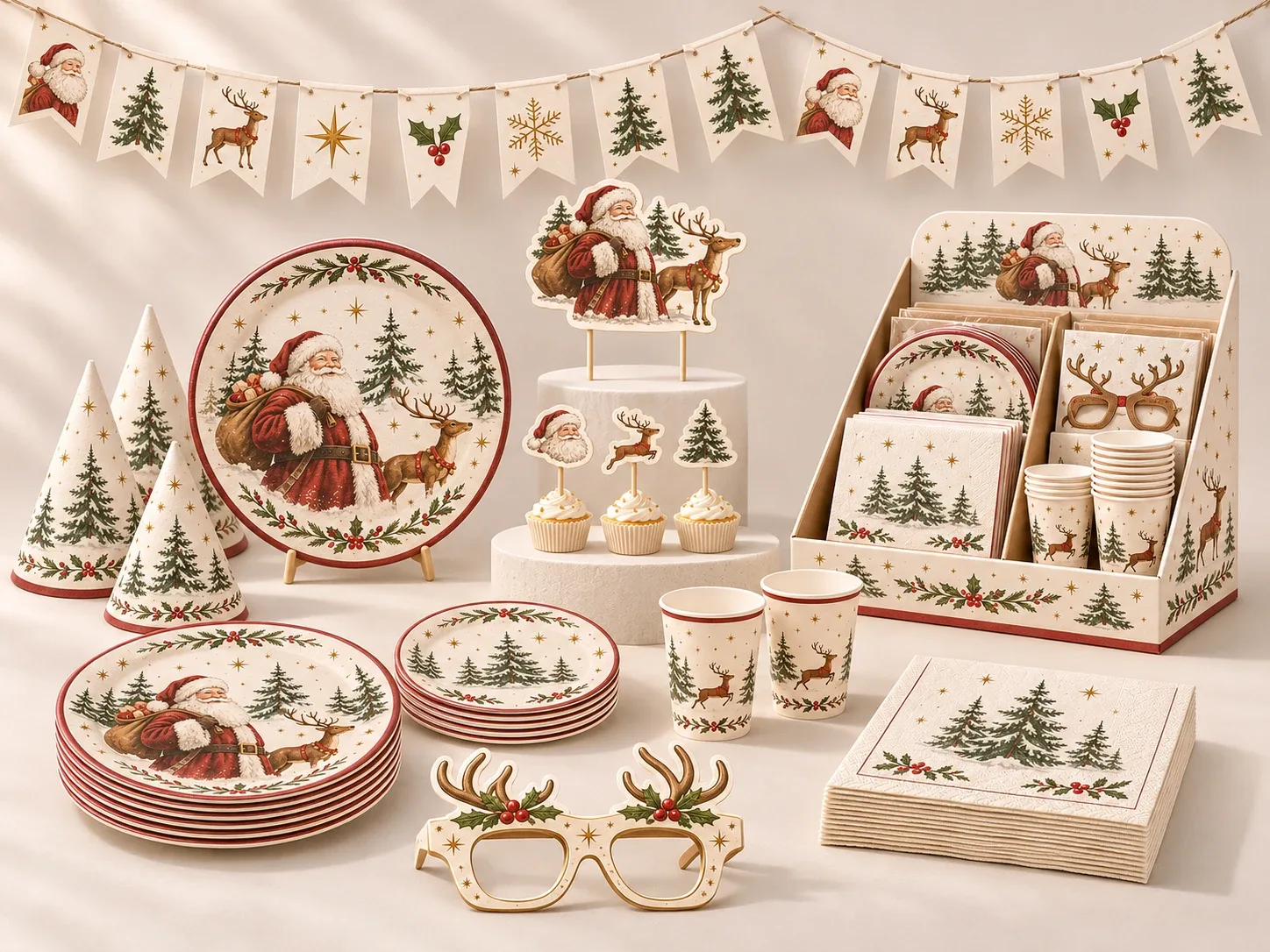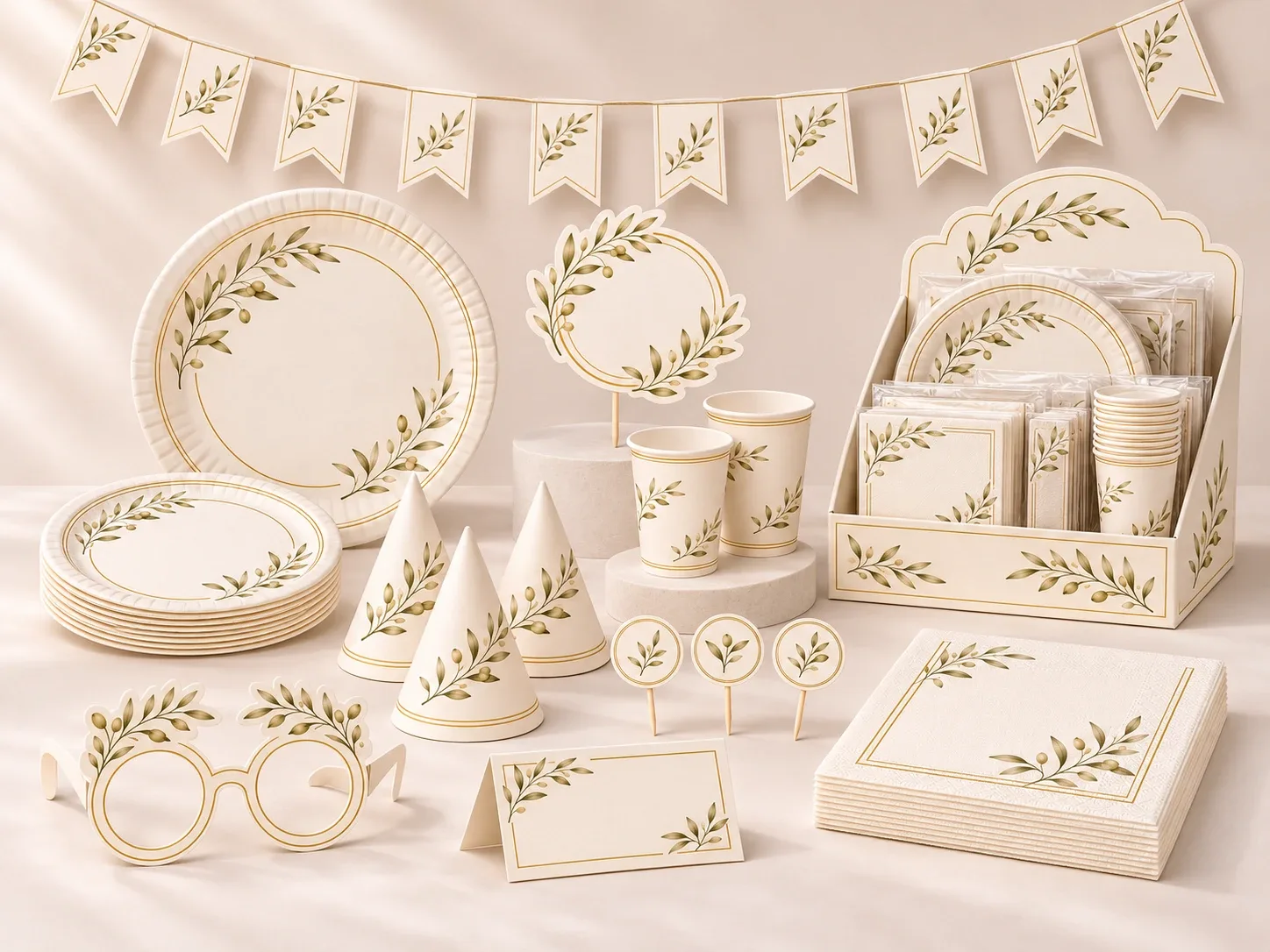
Ordering custom printed paper plates wholesale involves more than selecting a design. Plate dimensions, artwork, sample approval and packaging all affect the final product and quotation.
This five-step buyer’s guide helps brands, wholesalers and importers specify plate sizes, prepare artwork, approve samples, define packaging and compare supplier quotations before placing an order.
1. Choose Plate Dimensions for the Intended Use
Start with the food and serving conditions. Consider portion size, serving temperature and how long the food will remain on the plate.
| Intended use | What to assess |
|---|---|
| Cake and desserts | Space for the portion and utensils, plus resistance to moisture or grease where relevant. |
| Snacks and appetisers | Usable serving area, handling and suitability for several small items. |
| Main meals | Serving area, depth and support under the expected food load. |
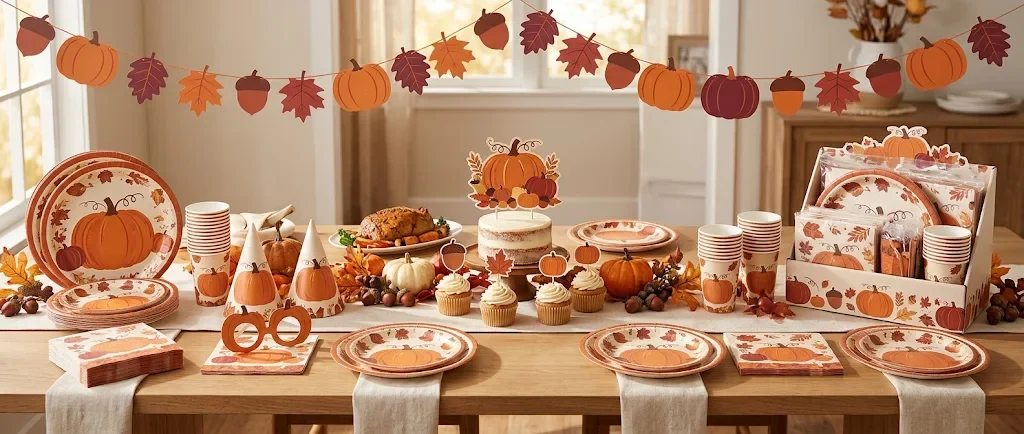
| Coordinated party collections | The relationship between plate formats, matching cups, napkins and retail packaging. |
Compare the overall dimensions with the usable area inside the rim. Two plates with the same outer diameter may provide different serving areas.
For example, a wider decorative rim leaves less space for food. Check this on a physical sample before selecting the format.
Ask the supplier to confirm the proposed paperboard, coating and construction. For custom shapes, confirm tooling availability and production feasibility before preparing the final artwork.
Explore PAPLUNO’s paper plates to discuss suitable formats.
2. Prepare Artwork for the Selected Plate
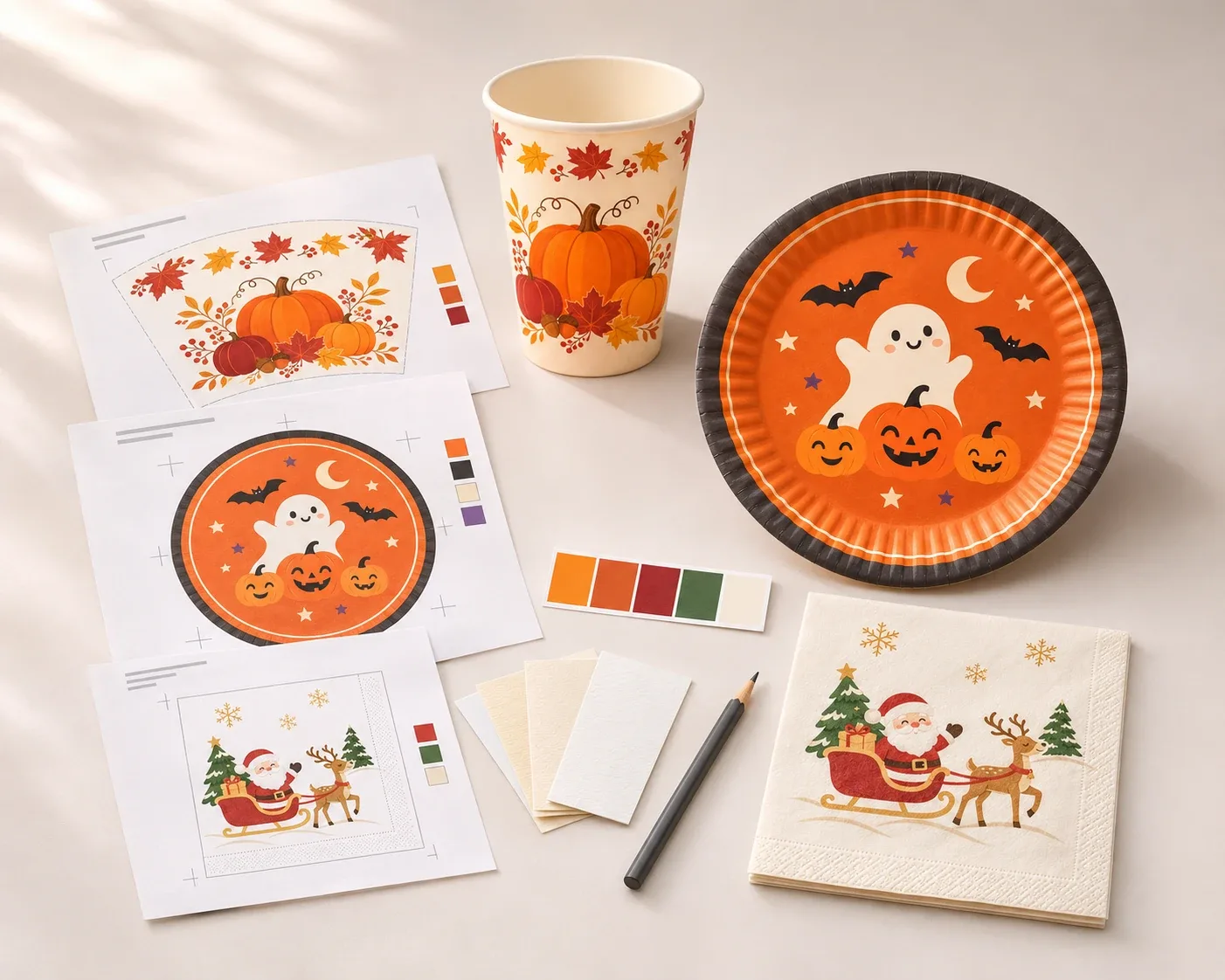
Once the size and shape are agreed, request the corresponding production template.
The template should identify:
- Printable area: where the design can be printed.
- Bleed: the area beyond the cut line that background artwork may need to cover.
- Safe zone: where essential text and logos should remain.
Check the design across both the centre and rim. Keep important details away from areas where cutting or forming could affect their appearance.
For repeating patterns, review how the pattern ends at the edge. For logos, confirm the position, orientation and visibility on the finished plate.
Before submitting files, ask which formats are accepted and whether fonts must be outlined, images embedded or colour references supplied. File preparation requirements should match the selected printing process.
For a visual explanation of bleed, see Adobe’s guide to printer’s marks and bleeds. Use your supplier’s production template to confirm the required measurements.
Use a digital proof to approve text and layout. Where printed colour or finish is important, agree on a suitable physical reference.
If the collection includes matching cups and napkins, review the products together. Confirm how the artwork should be adapted to each shape, print area and material.
See PAPLUNO’s customization page for further discussion.
3. Review Samples Before Approving Production
Choose a sample that answers the questions still open in your order.
| Proof or sample | What it helps assess |
|---|---|
| Digital proof | Wording, layout, orientation and artwork placement. |
| Material or format sample | Dimensions, structure, texture and handling. |
| Printed sample | Colour, print position and surface appearance on the represented product. |
| Packaging sample | Pack presentation, labels, quantities and product fit. |
Ask the supplier to identify any differences between the sample and the proposed production specification.
For a physical plate sample, check:
- Dimensions and forming: measure the plate and inspect the rim and edges.
- Intended use: test the expected food portion, temperature and contact time under agreed conditions.
- Handling: observe bending, grip and any visible grease or moisture effects.
- Stacking: check whether plates separate consistently during normal use.
- Print and packaging: compare the artwork reference, count the contents and inspect labels.
Record what has been approved and what still needs revision. Approval of an unprinted format sample, for example, does not establish approval of printed colour.
Request product information or testing evidence relevant to the proposed construction, intended use and destination market.
Confirm sample charges and delivery arrangements before proceeding. Visit Samples & Approvals for more information.
4. Specify Packaging for Your Sales Channel
Define packaging alongside the product specification because it forms part of the quotation and sample review.
Confirm:
- Plates per retail or inner pack.
- Packs per shipping carton.
- Packaging format and branding.
- Barcode and label requirements.
- Carton dimensions, packed weight and shipping marks.
Retail buyers should review how the product will be displayed and identified. Distributors should also consider storage, handling and order fulfilment.
For coordinated plates, cups and napkins, list the quantity of each component separately. State whether they will be sold as individual products or require a combined pack.
Approve the packaging layout and label files before bulk production.
5. Compare Quotations on the Same Basis
Send each supplier the same requirements. Identify any details that still need recommendations.
| Requirement | Information to provide |
|---|---|
| Product | Dimensions, shape, intended use and material requirements. |
| Design | Artwork files, revision number and colour references. |
| Quantity | Quantity per size and design. |
| Samples | Sample type and features requiring approval. |
| Packaging | Pack counts, branding, labels and carton requirements. |
| Delivery | Destination and required arrival date. |
Ask whether the quotation includes artwork preparation, printing setup, samples, packaging and labels. If freight is included, confirm the destination and transport method.
Clarify how MOQ applies to different sizes, designs and packaging configurations. Confirm production time separately from transit time, including which approvals are required before production begins.
Before placing the order, check that the quotation, artwork and approved sample records describe the same product.
Frequently Asked Questions
What is the MOQ for custom printed paper plates?
MOQ depends on the product specification, printing requirements, number of designs and packaging. Provide the quantity required for each size and design so the supplier can assess the order.
What affects the cost of custom printed paper plates wholesale?
Compare the unit price alongside artwork setup, tooling, sample charges and packaging. Ask suppliers to separate one-time charges from repeat-order costs and confirm the delivery terms used in each quotation.
What artwork files should I provide?
Request the production template and accepted file requirements first. Supply the current artwork version, dimensions and colour references, then resolve any file issues before proof approval.
Can I approve a sample before bulk production?
Agree on the sample type, cost, timing and approval scope with the supplier. Check which features represent the proposed production order and document any differences.
Can paper plates, cups and napkins be developed as a matching collection?
Discuss the full collection at the quotation stage. Specify the artwork, dimensions, quantities and packaging for each component, then review their appearance together.
Discuss Your Paper Plate Requirements with PAPLUNO
PAPLUNO supplies custom printed paper plates, cups and napkins for brands, wholesalers and importers.
To source custom printed paper plates wholesale, send your preferred dimensions, reference artwork, quantities by size and design, packaging requirements and delivery destination. Identify any specifications that need recommendations.