Personalized Paper Plates: A Complete Guide for Events, Brands & Bulk Orders
Posted in :

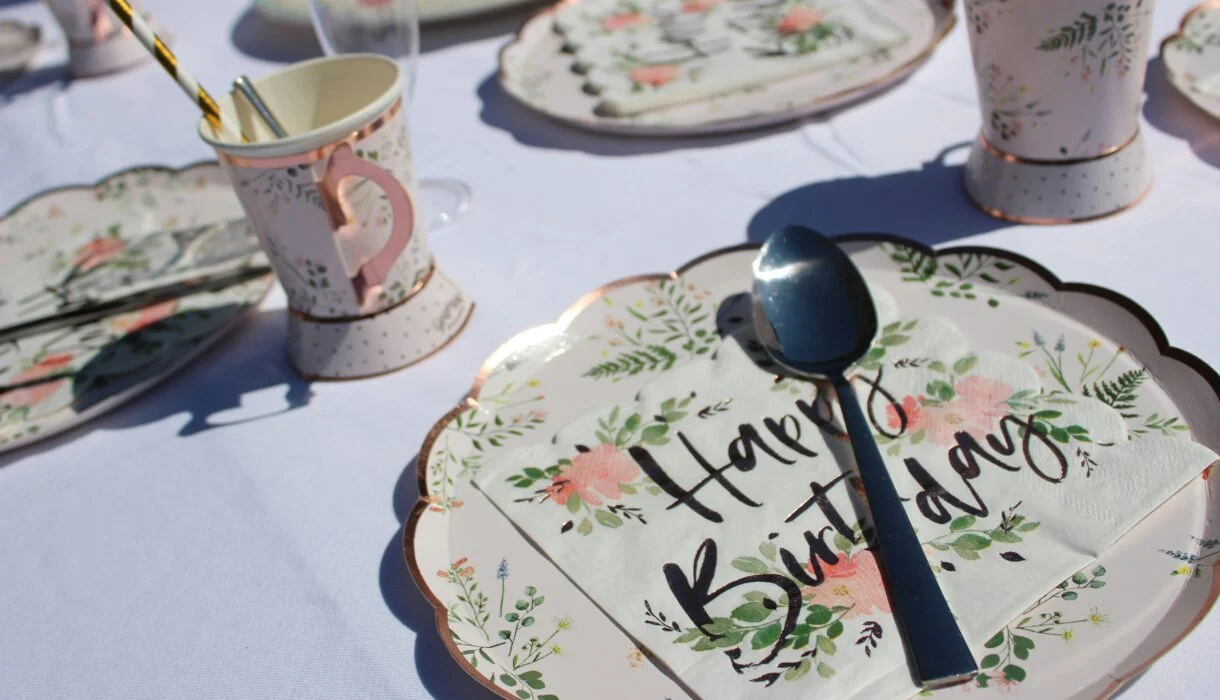
Few table details make an event feel considered as quickly as a stack of personalized paper plates carrying the right name, motif, or logo. They turn an ordinary buffet into something that looks deliberate, and for businesses they put your brand on every table rather than in a bin.
The problem is that most guides stop at “pick a design and order.” They ignore the parts that actually decide whether you get beautiful plates or a crate of disappointment: how the printing process affects colour, what quantities make sense, and how requirements differ between someone planning a 40-guest birthday and a company ordering 20,000 units.
This guide covers both. Whether you need a few hundred plates for one celebration or a recurring supply for your business, here is what to know before you order personalized paper plates.
What Counts as a Personalized Paper Plate
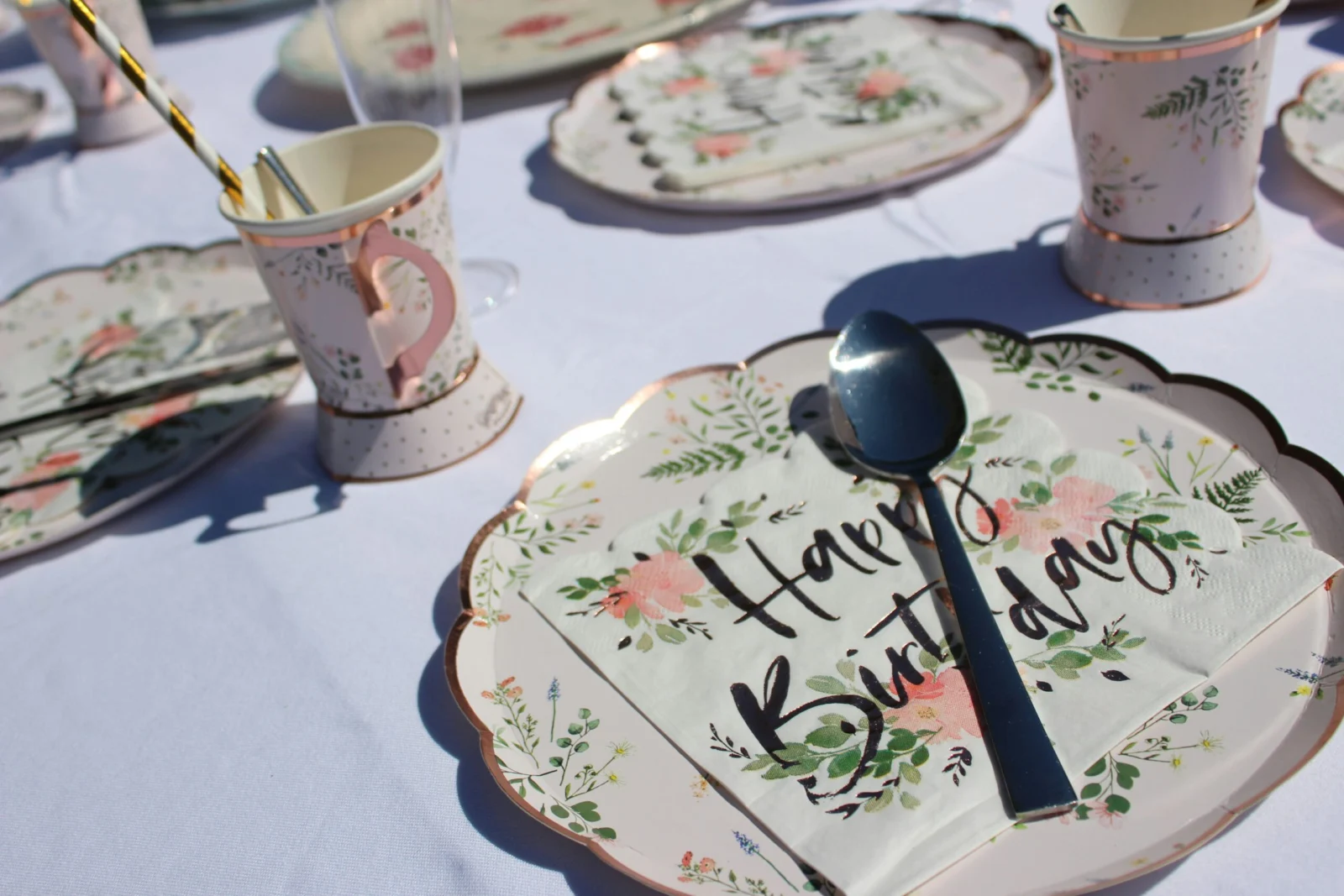
The term covers more ground than most people expect. Personalized paper plates can mean any of the following:
- Name and date printing for birthdays, weddings, showers, and reunions
- Monogram or crest printing for formal occasions and families
- Full custom artwork — illustration, pattern, or photography
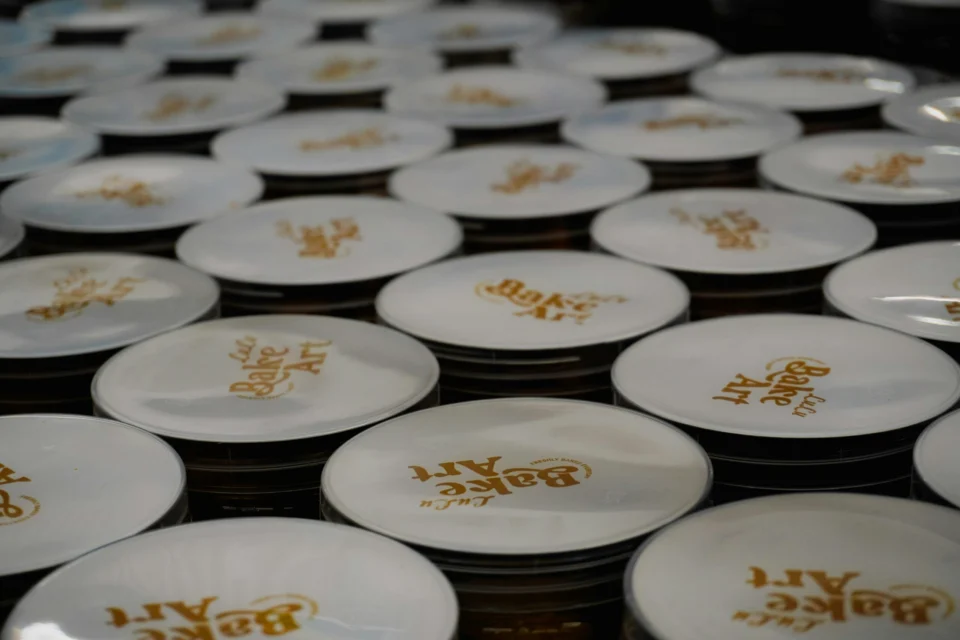
- Brand logo printing for restaurants, caterers, cafes, and corporate events
- Coordinated sets where plates, napkins, and cups share a single design language — see our coordinated tableware collections
The distinction matters because each has a different production path. A single line of text in one colour is a simple job. A full-bleed photographic print wrapping into the plate rim is not — and pricing, minimums, and lead times all change accordingly.
How Personalized Paper Plates Are Printed
This is the section most buyers skip, and it is the one that determines how your finished plates look.
Flexographic printing is the workhorse for paper tableware. Ink is applied from engraved rollers, which makes it economical at high volume and very consistent across a long run. It handles solid colours and simple line art beautifully, but it struggles with smooth photographic gradients.
Digital printing is better suited to photographic artwork and short runs, but per-unit costs stay higher and colours can vary slightly between batches. For personalized paper plates ordered in small numbers with detailed imagery, digital is often the practical option.
Offset printing sits between the two — excellent detail and colour accuracy, with setup costs that only pay off at volume.
Alongside the printing method, three material decisions drive the result:
- Board weight. Thinner board (around 250–300 gsm) suits desserts and light snacks. Heavier board (350 gsm and above) resists grease and moisture, which matters if you are serving hot food. A thin plate that sags under a slice of cake ruins the impression your design worked so hard to create.
- Coating. Matte finishes look refined and take pen marks well for place-card use. Gloss makes colours punchier and helps with grease resistance.
- Rim and shape. Round, square, and scalloped shapes are all widely available. Note that fine design detail near the rim can distort during die-cutting and forming — keep critical elements well inside the print area.

Choosing the Right Quantity
Quantity is where private party planners and business buyers part ways.
For personal events, the maths is simple: count your guests and add a working buffer — the same rule applies whether you are planning a birthday party plates order or a full wedding reception. Most hosts allow 1.2 to 1.5 plates per guest, because people take a second plate for dessert or to replace a messy one. A 60-guest dinner therefore needs roughly 75 to 90 dinner plates.
For businesses, the considerations are different and more structural:
- Order for a season, not an event. Recurring costs drop sharply when you order once per quarter rather than per job.
- Consider storage. Paper plates are bulky before they are formed. A 10,000-plate order occupies real warehouse space, and humidity damages stock — keep cartons off bare concrete.
- Design for flexibility. If your brand may evolve, printing a neutral pattern and adding a name or date at the point of use keeps you from scrapping stock.
For personalized paper plates in a business context, a first run of 3,000 to 5,000 units is usually the smallest quantity that still earns sensible wholesale pricing.
Understanding Minimum Order Quantities and Pricing
Almost every first-time buyer is surprised by minimums. If you are unsure whether your quantity qualifies, our custom paper tableware range is a good starting point. Digital short-run services can often start around 50 to 100 plates, but traditional wholesale printing typically begins at 1,000 to 3,000 units per design, and many suppliers prefer 5,000 or more.
The reason is fixed setup cost. Mounting rollers or plates, mixing ink, calibrating registration, and running test sheets cost roughly the same whether you print 500 plates or 50,000. That cost is spread across the order, which is why unit prices fall steeply as quantity rises.
Four factors determine the price of any personalized paper plates order:
| Factor | Effect on price |
|---|---|
| Quantity | Largest single lever — higher volume means lower unit cost |
| Number of colours | Each additional colour adds a setup charge |
| Plate size and board weight | Bigger, heavier plates cost more per unit |
| Coating and finish | Matte, gloss, and grease-resistant coatings each add cost |
If a quote seems dramatically cheaper than every other supplier, ask what differs. In practice, unusually low pricing usually means thinner board, fewer colours, stock designs with a stamp added, or a lead-generation number that will change once you commit.
Preparing Artwork That Prints Correctly
The most common cause of a failed order is artwork that was never print-ready. Fixing this before files are sent is the cheapest insurance available.
- Supply vector files — AI, EPS, or PDF — with text converted to outlines
- Use CMYK, not RGB. Paper printing uses ink, not light, and colours shift noticeably if this step is skipped
- Provide 300 DPI minimum for any raster imagery at final print size
- Respect the bleed allowance, typically 2–3 mm
- Keep key elements inside the safe area, away from the rim where forming distorts detail
For brand logos, also request a physical sample before committing. Screen colours and printed ink rarely match exactly, and a logo that reads clearly at small sizes on screen can lose detail when printed at scale across a plate face.
Business Uses Beyond the Party
For companies, personalized paper plates are a marketing surface, not just tableware. Common applications include:
- Catering and food service — branded plates that carry your identity into client venues
- Restaurant takeaway — reinforced plates printed with your logo for delivery orders
- Corporate events — conference catering, product launches, and staff celebrations
- Trade shows and pop-ups — high-visibility, low-cost branded touchpoints
- Resale — party retailers and event planners buying printed sets to resell
In each case, the plate becomes a small, repeated advertisement. That is why businesses should compare suppliers on print consistency, not only on unit price — a batch with visible colour drift across cartons does more damage to a brand than a marginally higher quote.
How to Vet a Supplier
Before sending money, confirm the practical details that decide whether the order goes smoothly. Requesting samples and approvals first is the single best way to avoid surprises.
- Physical samples using your actual artwork, not a generic swatch
- Sample cost and credit policy — many suppliers credit it against a final order
- Lead time from artwork approval to shipment
- Packaging method — sleeved or loose in cartons
- Carton dimensions and weight for freight calculation
- Remake or credit policy if a batch arrives defective
- Food-contact compliance — food-grade inks and board certification are legal requirements in most Western markets
A written policy on reprints is a strong signal of a supplier that has handled enough orders to have needed one.
Frequently Asked Questions
How many personalized paper plates do I need for a party?
Allow 1.2 to 1.5 plates per guest. A 50-guest party usually needs around 60 to 75 dinner plates, plus a smaller dessert size if you are serving two courses.
Can I order personalized paper plates in small quantities?
Yes, but the route differs. Digital short-run services handle 50 to 500 units at a higher per-unit cost. Traditional wholesale printing becomes economical from roughly 1,000 units upward.
How long does an order take?
For personal orders from short-run services, one to two weeks is typical. For wholesale volumes, plan two to three weeks for sampling and artwork approval, then four to six weeks for production, plus shipping.
Do personalized paper plates work for hot food?
This matters most for a served meal. If you are planning a reception, our guide to wedding paper plates covers board weights for hot food in detail.
They can, provided the board is heavy enough — 350 gsm and above with a grease-resistant coating. Thin dessert-weight plates will fail under hot, moist food regardless of how good the design is.
Is printing a company logo on paper plates worth it?
For businesses that host clients, exhibit, or deliver food, yes. The cost per impression is very low, and branded tableware signals attention to detail in a way generic plates cannot.
The Bottom Line
Ordering personalized paper plates comes down to matching the design ambition to the production reality. Choose the printing method that suits your artwork, pick board weight based on what is being served, supply genuinely print-ready files, and order at a quantity where the economics work.
Do that, and the plates on the table will look exactly as considered as the event around them — whether that event seats 40 guests or serves 40,000.
Ready to start? Request your custom quote and we will walk you through artwork, quantities, and lead times.
Photos: Karen Cann, Bailey Alexander, and Adhitya Sibikumar on Unsplash.


One thought on “Personalized Paper Plates: A Complete Guide for Events, Brands & Bulk Orders”